
Why Seeing Your Designs in the Real World Changes How You Design
What products, customers, and context can teach you that mockups can’t
Mockups are incredibly useful.
They help us test scale, visualize product applications, and understand how patterns may work together before anything is printed.
But there’s another layer of learning that happens when your designs move beyond mockups and into the real world.
Whether that means producing your own products, seeing a licensed design in person, or simply watching how people respond to your work in a market setting, real-world context teaches you things a screen never can.
1. You Learn What Draws People In
At a market, people rarely explain why they’re drawn to something.
They simply reach for it.
They pause.
They smile.
They pick one pattern up before another.
Watching those reactions can reveal:
Which motifs attract attention first
Which colors feel universally appealing
Which designs people return to repeatedly
Sometimes the design you assumed would be the bestseller isn’t the one customers connect with most.
And that kind of feedback is invaluable.
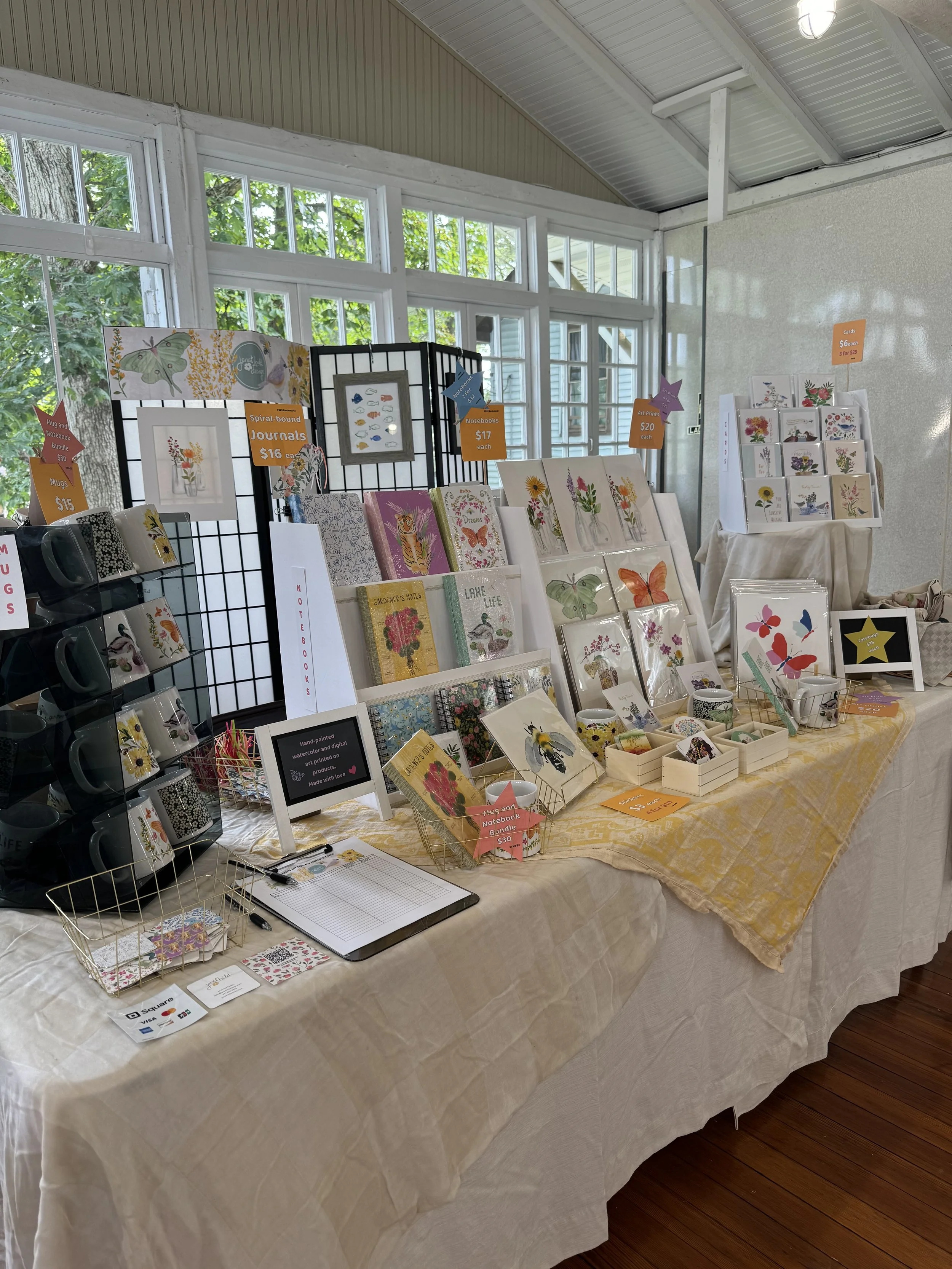
My first market table, Lake Nuangola Craft Market 2024
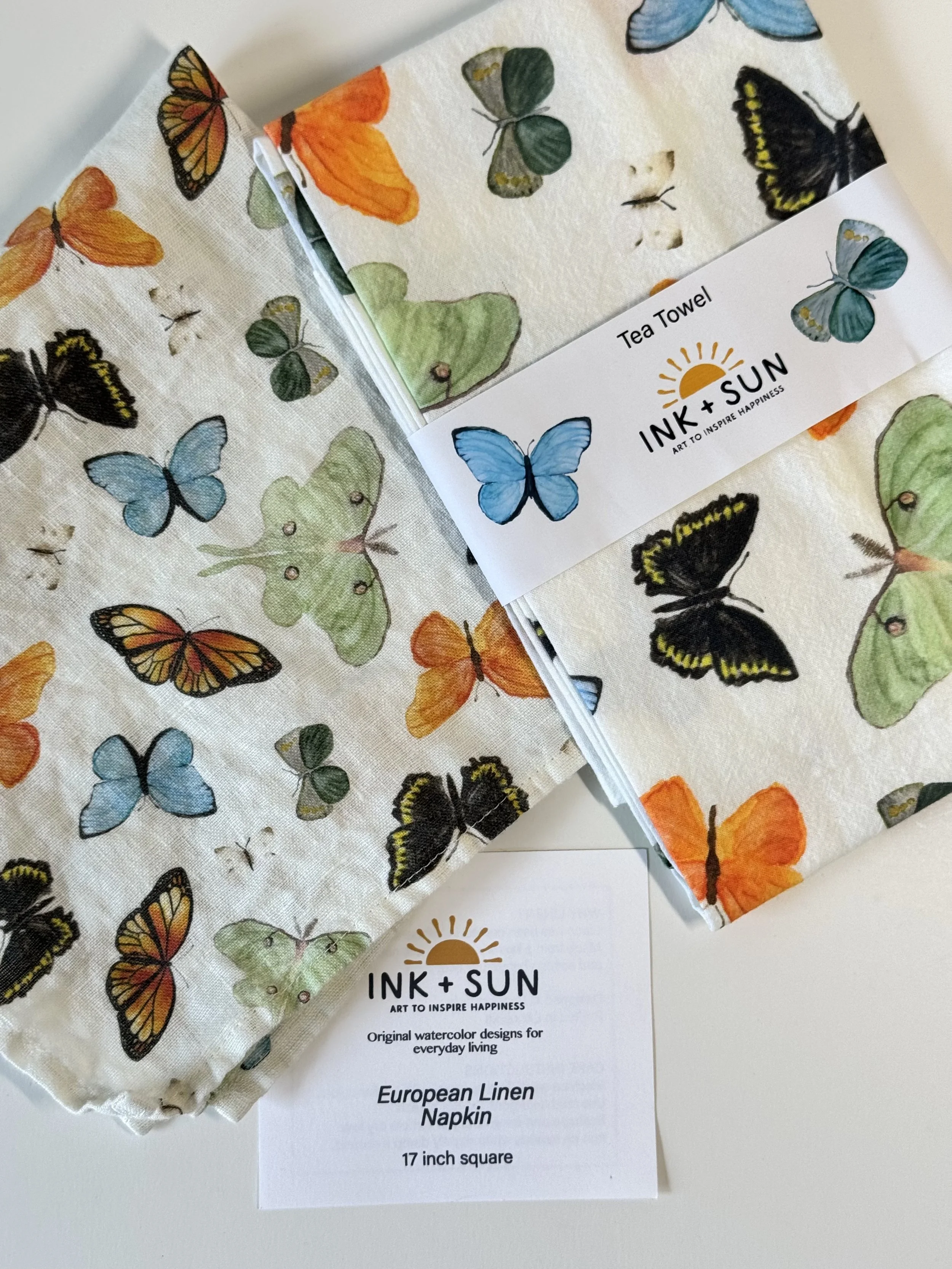
Watercolor butterflies in two scales for tea towels and napkins
2. You Understand Scale More Clearly
A pattern viewed on a screen is abstract.
A pattern held in someone’s hands is not.
Seeing your designs at actual scale helps you notice:
Whether motifs feel too large or too small
Whether the repeat is distracting or elegant
Whether spacing supports the product’s intended use
Scale is one of the hardest things to judge digitally. Physical products make it obvious very quickly.
3. You Notice Which Designs Are Most Versatile
Some patterns that seem quiet on screen become stars in person.
Others that looked exciting digitally may prove harder to use in real life.
Real products reveal:
Which patterns layer easily
Which work across multiple applications
Which feel most livable
Versatility matters more than novelty when a design enters everyday life.
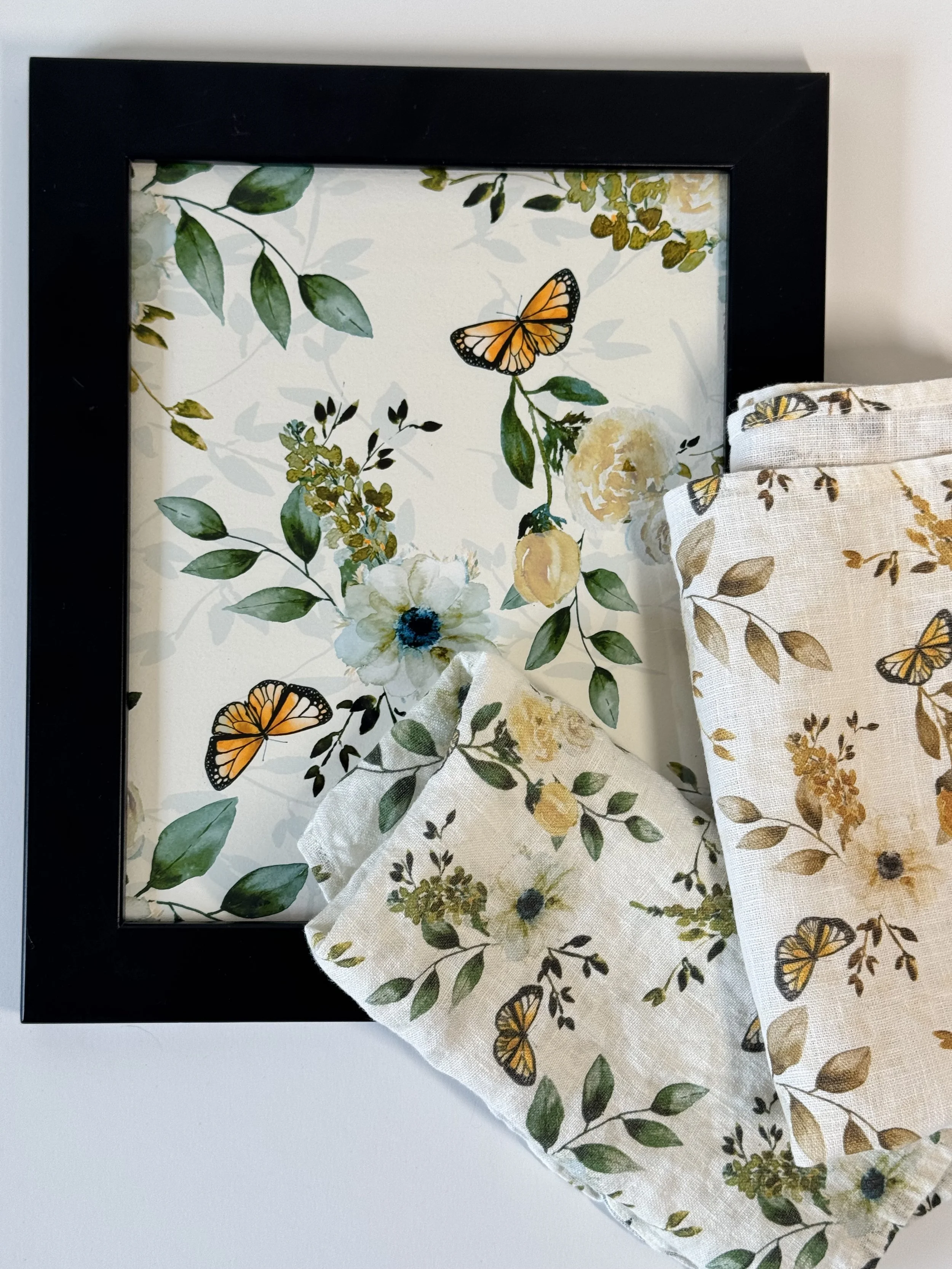
Spring Rose art print and napkins in two colors
4. You Begin Designing with Use in Mind
Once you’ve seen your patterns become products, your design decisions start to shift.
You think more intentionally about:
End use
Product scale
Surface area
Repeat visibility
How patterns will layer in a space or on apparel
That perspective changes the way you build collections moving forward.
Real-World Feedback Builds Better Instincts
Not every designer will produce physical products.
Not every designer needs to.
But whenever you have the opportunity to see your work in use, try it.
Print samples.
Order POD.
Create mock products.
Attend a market.
Observe reactions.
Because every time your work leaves the screen, it teaches you something.
Instead of asking only:
“Does this pattern look good?”
Try asking:
“How does this pattern meet the needs of the product it’s designed for?”
That’s often where the most valuable design lessons begin.
Keep an eye out for my newsletter: I’ll be sharing a few observations from this spring’s art markets in an email at the end of the month, including which designs people responded to most and what surprised me.