
Pattern Development: What Actually Changes From Sketch to Final Design
Pattern development isn’t a straight line. Most of the real work happens after the motif is “finished.”
Common Assumption
Once a motif looks good, the pattern is mostly done.
Why That Breaks Down
Brief explanation:
repeat structure changes perception
spacing matters more than motif detail
color behaves differently in repetition
Do This / Not That
Do this:
Test motifs in repeat early. Use sketches to plan the right repeat.
Use more that one version of your motif. Creating 3-5 versions allow for more interest
Simplify shapes when scaling down
Design motifs for repetition, not isolation
Not that:
Finalizing motifs too early can cause you to focus more on the motif and less on the repeat
Judging repeats from single tiles. Repeat out at 1/4 scale so you can identify columns, gutters, and diagonals.
Skipping test prints. Print your repeated patterns to see the real world scale.
Development Examples
Example 1: Canna Indica Leaf
While the single leaf was interesting, it would not stand alone in a simple repeat. Layering was the best option. FYI: for best results use 3-5 different versions of the motif, not one like I used!

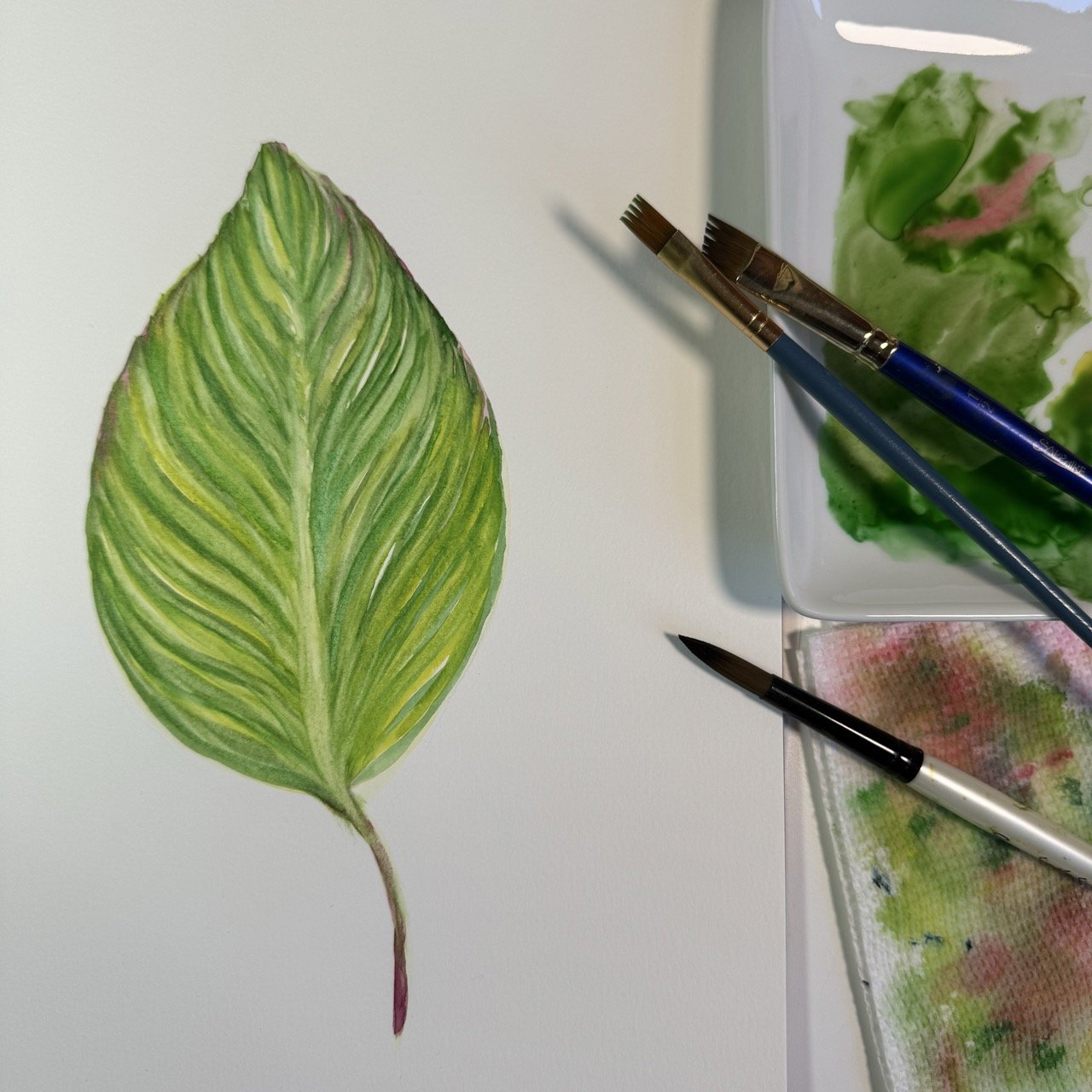
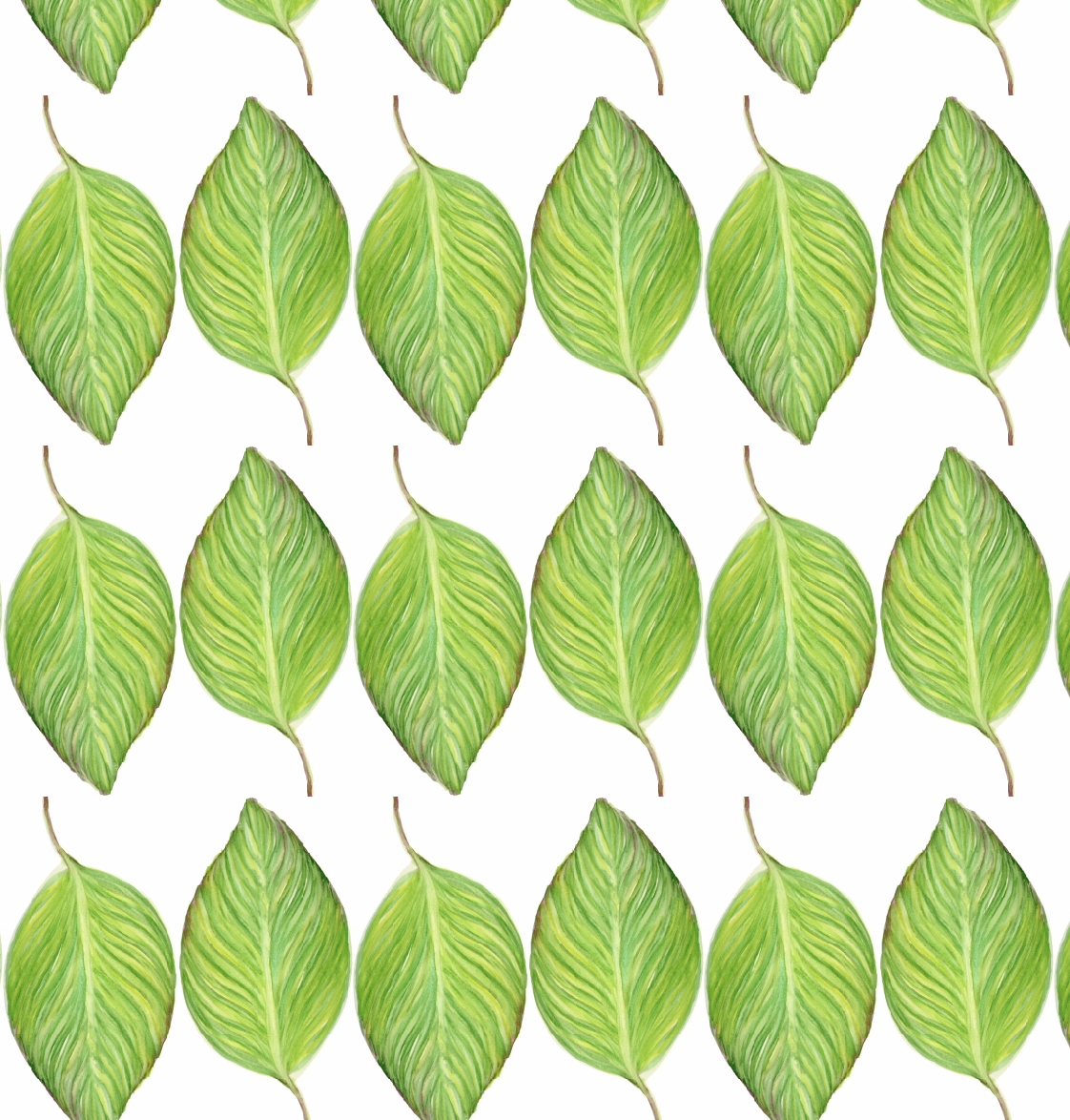
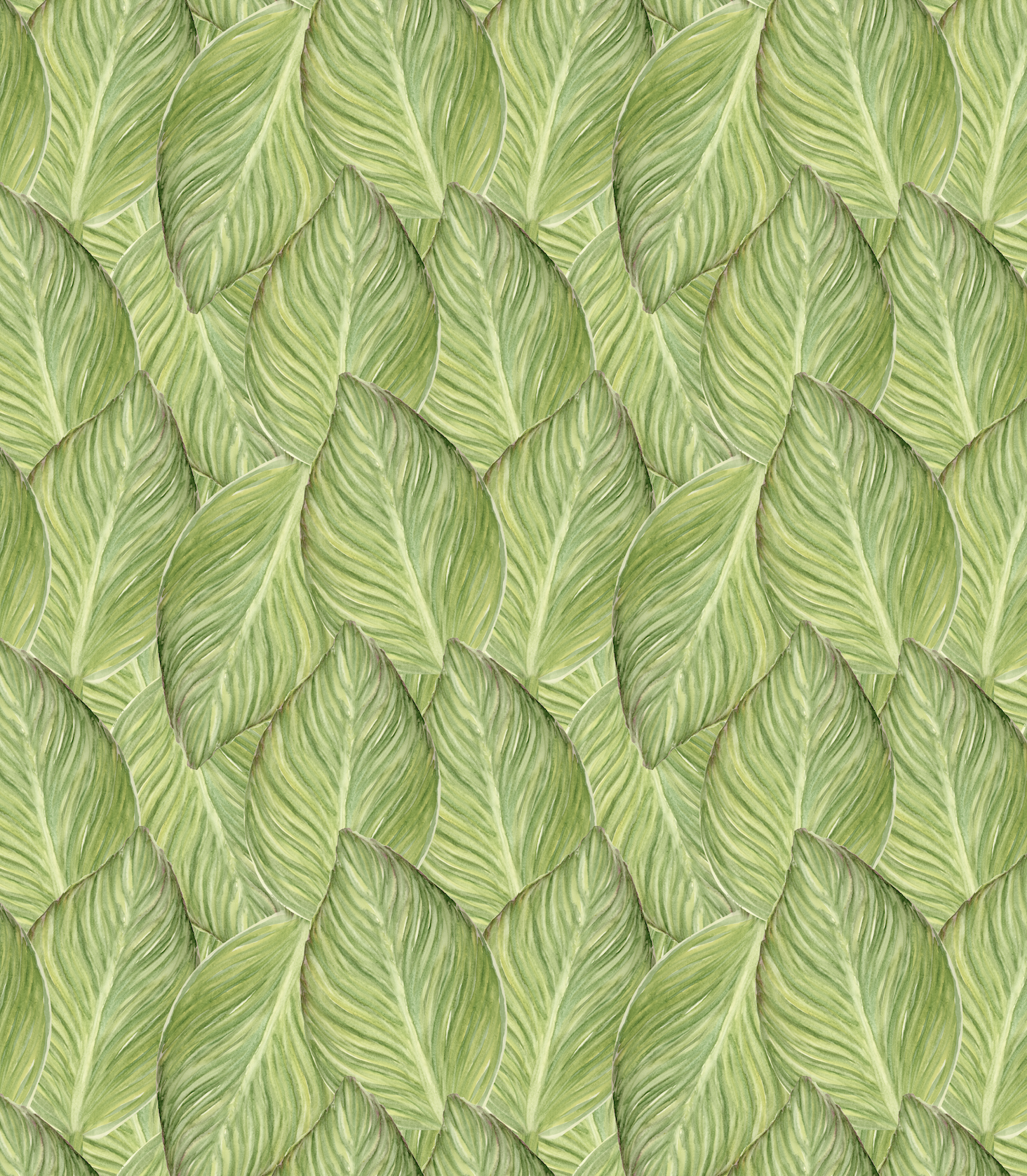

Pattern Considerations:
the original motif is very busy on its own
the leaf detail would stand out too much if mixed with other motifs or left on an open ground
here a packed pattern density gives a natural effect
Why This Matters
Canna leaf is a blender in this collection, not the hero. It sits between the smaller floral hero and the textural stripe in detail, complexity, and use
This motif wants to be large scale (like the leaf itself) but needs to feel calm
Creating an overlapping continuous design blended the detail and gave it an aesthetic that feels derived from nature
Example 2: White Floral Holiday
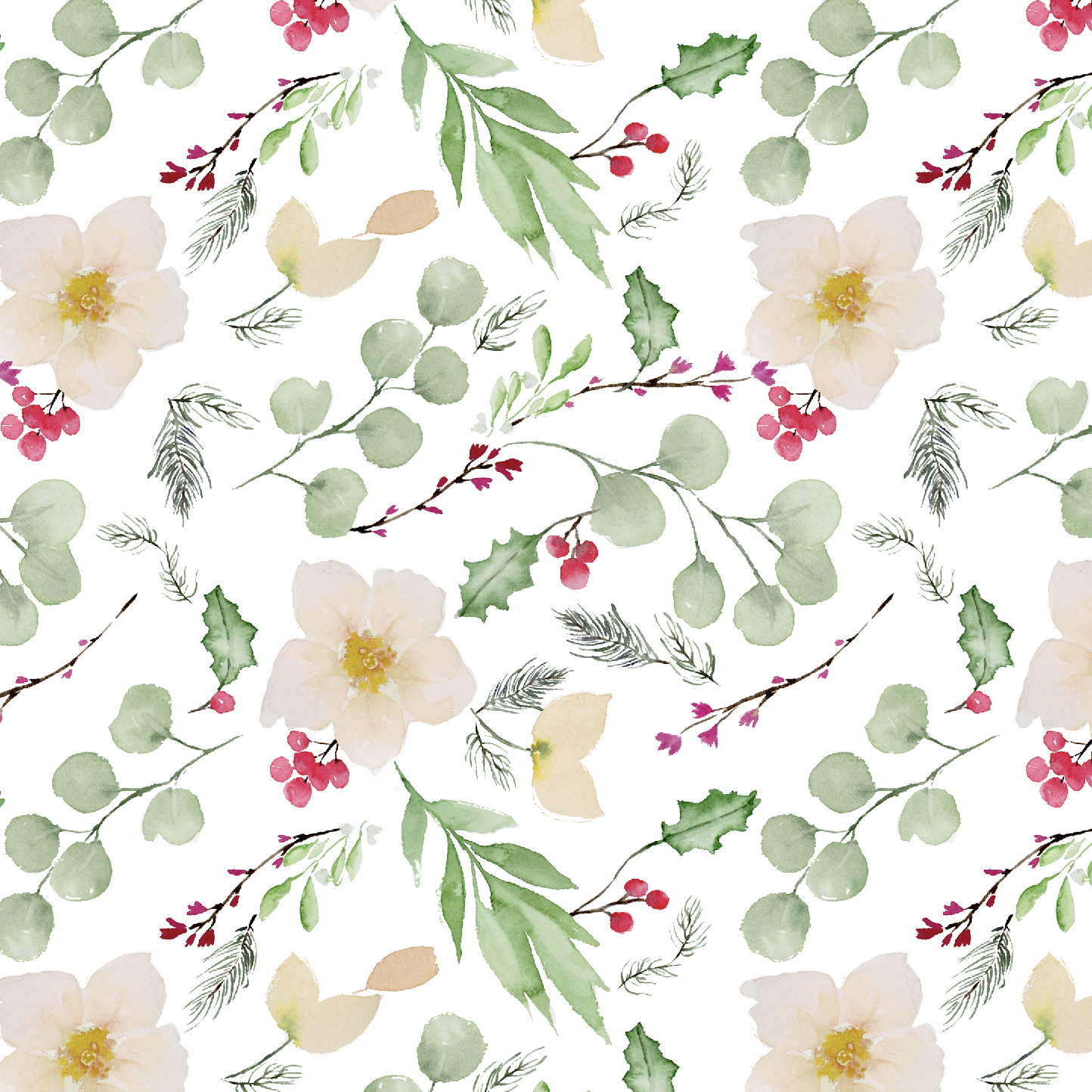
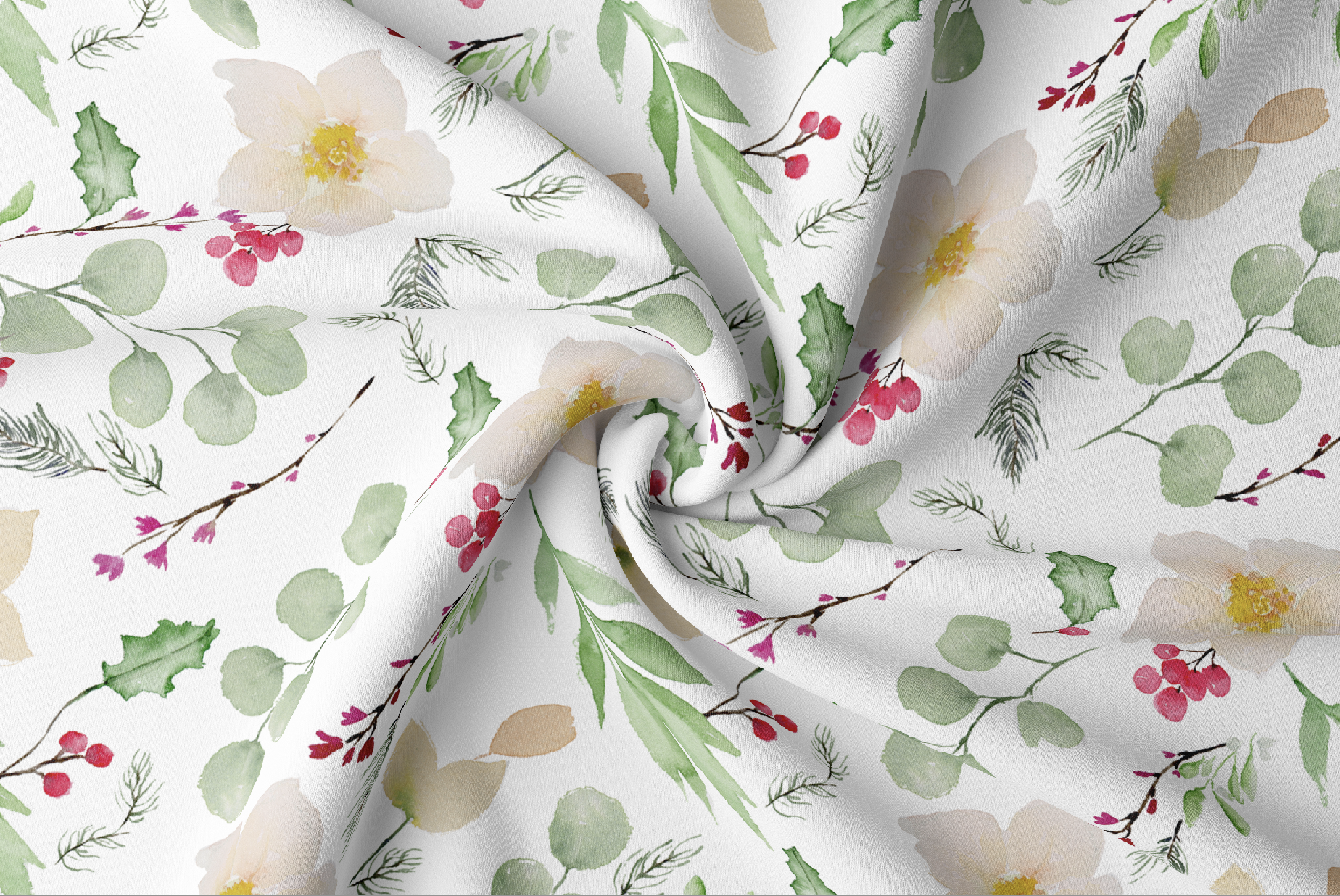
These painted elements worked well together from the start. A main goal when creating motifs is to create them at the scale that complements the group. The process then is about building the repeat so it feels eye-catching and usable.
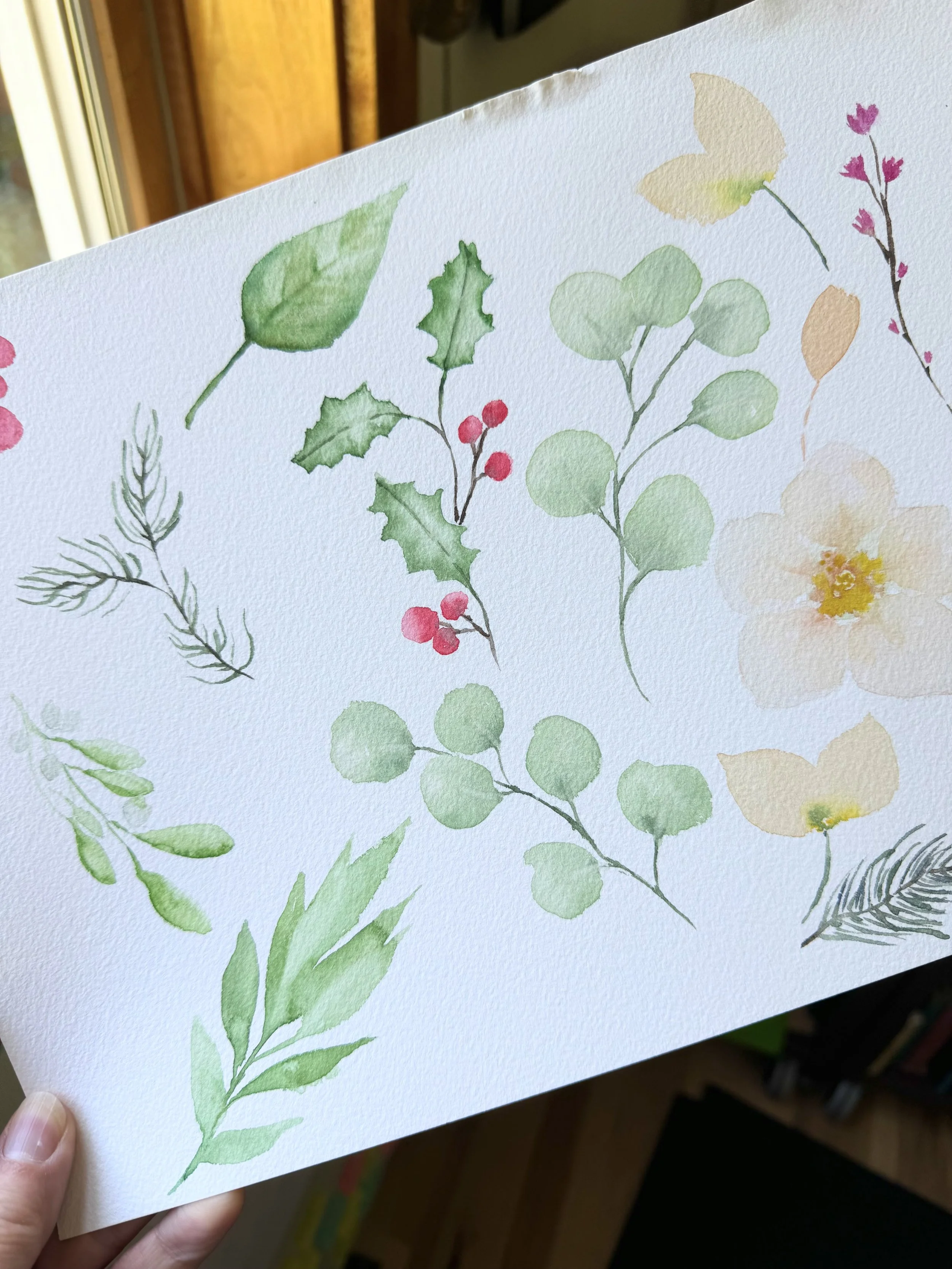


Pattern Considerations:
density decisions - maintain a (fairly) consistent ground throughout
look for flow in the repeat
motif simplification - clean up edges but let motifs be imperfect
help the motifs feel grounded by adding a slight watercolor texture (stipple).
Why This Matters
for pattern clarity - simplicity helps the watercolor motifs shine
for print quality - ground texture aids in printability
for usability - visual flow makes a design easier on the eye, applicable for fabric and wallpaper
Pattern development is less about adding — and more about removing what doesn’t serve the repeat.
Check out another example here: Fix a Flat Pattern